

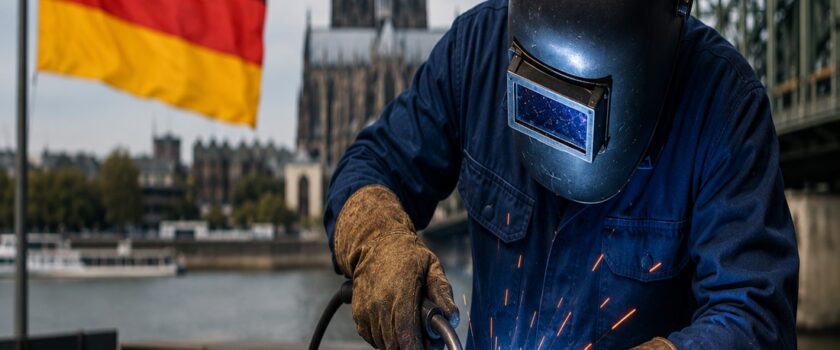
Welding Jobs Abroad Overseas. vacancies in Germany
Welding Jobs Abroad Overseas: How to Land a High-Paying Welder Job in Germany (2026 Guide)
If you’re a welder thinking about packing your tools and chasing a better paycheck somewhere new, you’re not alone. Thousands of skilled welders from Nigeria, the Philippines, India, the UK, and across Eastern Europe are quietly making the move to Western Europe right now — and for good reason. The pay is solid, the working conditions are world-class, and demand is far outstripping supply. Welding Jobs Abroad Overseas is a high paying skilled job you have to consider.
Out of all the destinations to consider for welding jobs abroad overseas, Germany keeps coming up at the top of the list. And honestly, once you look at the numbers, it’s not hard to see why.
In this guide, I’ll walk you through exactly what working as a welder in Germany looks like in 2026 — the real salaries, the visa process, the qualifications you actually need, and the practical career tips most websites won’t tell you. By the end, you’ll know whether this move is right for you and exactly how to take the next step.
Why Germany Is the Hottest Market for Welding Jobs Abroad Overseas
Germany has a problem — a good problem if you’re a welder. The country’s industrial machine is enormous, but its workforce is aging fast. Older welders are retiring, and not enough young Germans are stepping into the trade to replace them. That gap is being filled by foreign workers, and employers are actively rolling out the welcome mat.
The European welding equipment market is projected to hit USD 5.97 billion by 2029, growing at over 4% per year. That growth isn’t happening in a vacuum — it means more pipelines, more cars, more wind turbines, more buildings. And every single one of those projects needs welders who know what they’re doing.
Here’s what makes Germany stand out from other countries offering welding jobs abroad overseas:
- Active labour shortage — employers are sponsoring visas, not just considering them.
- English is widely used in industrial settings, so you don’t need fluent German on day one.
- Strong worker protections — paid leave, health insurance, fair contracts.
- Central European location — easy weekend travel to France, Italy, the Netherlands, and beyond.
- Recognition of foreign qualifications through formal pathways.
Types of Welding Jobs You Can Find in Germany Abroad Overseas
Germany’s industrial base is wider than most people realise. You’re not stuck with one type of work — there’s room to specialise based on what you enjoy and where the money is best.
| Industry | Typical Work | Skill Level |
|---|---|---|
| Automotive | Precision welding for car frames, parts, robotics support | Intermediate to advanced |
| Construction | Structural steel, bridges, commercial buildings | All levels |
| Shipbuilding & Marine | Hull welding, repair work in northern ports | Advanced |
| Renewable Energy | Wind turbine towers, solar mounting, hydrogen plants | Intermediate to advanced |
| Oil, Gas & Pipelines | High-pressure pipe welding, certified TIG/MIG work | Advanced (cert required) |
| Manufacturing | Machinery, metal fabrication, custom workshops | All levels |
If you’ve got certifications in TIG, MIG/MAG, or stick (SMAW), you’ll find work quickly. Pipe welders and those with 6G certification tend to command the highest pay.
Real Salary Expectations for Welders in Germany
Let’s talk money — because that’s probably why you’re reading this in the first place.
Salaries vary based on experience, specialisation, and the region you work in. Bavaria and Baden-Württemberg pay more than parts of eastern Germany, but the cost of living is also higher there. Here’s a realistic picture:
| Experience Level | Annual Salary (Gross) | Hourly Rate |
|---|---|---|
| Entry-level welder | €25,000 – €29,000 | €12 – €15 |
| Mid-level welder | €30,000 – €38,000 | €15 – €19 |
| Senior / Specialist welder | €37,000 – €46,000 | €19 – €23 |
| Certified pipe welder (6G) | €45,000 – €55,000+ | €22 – €28+ |
On top of base salary, you usually get:
- Paid overtime (commonly 25%–50% extra per hour).
- 24 to 30 days of paid holiday a year.
- Statutory health insurance and pension contributions.
- Christmas and holiday bonuses at many companies (13th month pay is common).
- Travel allowances if the job site is far from home.
When you add it all up, a senior welder in Germany takes home noticeably more than equivalent roles in most of Europe — and dramatically more than in many non-EU countries.
What a Typical Workday Looks Like
Germans take work seriously, but they also take finishing work seriously. Most welding shifts start early — 6:30 or 7:00 AM is normal — and end by mid-afternoon. You’ll typically work an 8-hour day with a proper lunch break (and yes, lunch is usually a real meal, often eaten together with colleagues).
The work environment leans heavily on safety. Personal protective equipment is non-negotiable, machinery is well-maintained, and you’ll rarely be asked to cut corners. If something doesn’t feel safe, you have the right — and the support — to stop and raise it.
Overtime exists, especially when deadlines tighten, but it’s voluntary in most cases and always paid. Friday afternoons are often half-days, and weekends are genuinely off.
Qualifications You’ll Need as a Foreign Welder
Here’s where a lot of people get nervous, but it’s actually more straightforward than you might think.
Most German employers want to see:
- Vocational training certificate in welding or a related trade.
- Welding certifications — ideally EN ISO 9606 (the European standard), or equivalents like AWS that can be recognised.
- Proof of experience — typically 2+ years on the type of welding you’re applying for.
- Basic German (A2/B1) is helpful but not always required at hiring. Many companies will pay for language courses once you’re hired.
- Recognised qualification document — Germany has a formal process called Anerkennung to recognise foreign credentials.
If your home-country certification isn’t directly recognised, don’t panic. You can usually take a German welding test (called a Schweißerprüfung) shortly after arrival to validate your skills. Many employers organise and pay for this themselves.
Visa Requirements: EU Citizens vs. Non-EU Citizens
This is where the path splits depending on your passport.
| Status | What You Need | Timeline |
|---|---|---|
| EU/EEA citizen | No visa required. Just register at the local Einwohnermeldeamt within 14 days of arrival | Same week |
| UK citizen (post-Brexit) | Skilled Worker visa or EU Blue Card (depending on salary) | 4–12 weeks |
| Non-EU citizen with job offer | Skilled Worker visa under the new Skilled Immigration Act | 6–12 weeks |
| Non-EU citizen without job offer | Job Seeker visa (6 months to find work) | 4–8 weeks |
Germany’s new Skilled Immigration Act has made the process significantly easier for non-EU workers in trades like welding. If you have a recognised qualification and a job offer, you can move fairly quickly. Many reputable recruitment agencies handle the paperwork for you.
The Application Process — Step by Step
Most foreign welders find jobs through specialist recruitment platforms that work directly with German employers. Here’s the typical journey:
| Step | What Happens | Timeframe |
|---|---|---|
| 1. Apply online | Submit CV, certifications, and a short profile | Day 1 |
| 2. Initial screening call | A recruiter discusses your goals, skills, and preferences | Within 5 days |
| 3. Employer interview | Often via video call, sometimes with a practical test | 1–2 weeks |
| 4. Job offer & contract | Review terms, sign contract | 2–3 weeks |
| 5. Visa & paperwork | Recruiter or employer supports the visa process | 4–8 weeks |
| 6. Relocation & start | Travel to Germany, register, start work | Total: 2–6 months |
Some agencies even arrange your first three months of accommodation in shared housing — particularly useful if you’re landing in expensive regions like Bavaria where the rental market is brutally competitive.
Career Tips: How to Stand Out When Applying
This is the part most blogs skip. If you want to actually land one of these welding jobs abroad overseas — and not just dream about them — here’s what works:
1. Get your certifications in order before applying. Scan everything. Translate them into English or German. Recruiters won’t wait for you to chase paperwork.
2. Take a photo or video of your welds. A short clip of you running a clean bead carries more weight than any CV. Many employers ask for this anyway.
3. Learn 50 German words before you arrive. Not 5,000 — just 50. Greetings, numbers, basic workshop terms (Schweißen, Naht, Stahl, Sicherheit). Your future colleagues will notice and appreciate the effort.
4. Be honest about your level. Don’t claim 6G if you can only do 3G. The Germans will test you, and getting caught out is worse than being honest from the start.
5. Pick agencies that have a real presence in Germany. Anyone can put up a website. Look for recruiters with verified employer partnerships, transparent fees (in most legitimate setups, the employer pays the recruiter — not you), and clear communication.
6. Sort your finances before you fly. Have at least two months of living expenses in savings. Even with accommodation help, you’ll need money for deposits, transport, and basic setup.
7. Plan for the long game. A welding career in Germany can lead to specialist certifications, supervisor roles, even welding inspector positions that pay €60,000+ a year. Don’t just think about year one.
Frequently Asked Questions
Can I get welding jobs abroad overseas without speaking German? Yes, especially in larger companies and industrial cities. But learning basic German will speed up your integration and open more opportunities.
How long does the whole process take? From first application to actually starting work in Germany, expect 2 to 6 months for non-EU citizens, and 4 to 8 weeks for EU citizens.
Do I need to pay agencies to find me a job? In most legitimate cases, no. The employer pays the recruiter. Be cautious of any agency asking for large upfront fees.
Can I bring my family with me? Yes. Germany allows family reunification visas for spouses and children, and Germany has strong public schools and healthcare.
Will my qualification from Nigeria, the Philippines, India, or elsewhere be recognised? Often, yes — through the formal Anerkennung process. If not directly recognised, you can take the German welding test on arrival.
Final Thoughts: Is This the Right Move for You?
Welding jobs abroad overseas aren’t a shortcut to easy money — you’ll still work hard, you’ll still face culture shock, and the first few months will test you. But for skilled welders who want better pay, safer working conditions, and a real path to long-term stability in Europe, Germany is genuinely one of the strongest options available right now.
The demand is real. The salaries are real. The pathways for foreign workers are wider open than they’ve been in decades. If you’ve got the skills and the willingness to put in the work, there’s a place for you here.
Start by getting your documents in order, picking a reputable recruitment partner, and applying to a few roles to see what comes back. The worst case is you learn something. The best case is your whole career changes.
Browse the latest welder vacancies in Germany and take the next step today.
You can still browse list of German Welding jobs at Hello-jobs too