


What Are the Three Golden Rules of an Interview?
You’ve finally secured the interview you were hoping for, and now it’s time to get to work.
I know interviews can make you nervous. I’ve been there myself, and we at Apex Global Career have helped countless people prepare for their big day.
The truth is, even the most qualified candidates can miss out on their dream job if they don’t follow some fundamental principles during the interview process.
Over the years, we’ve noticed that the candidates who succeed aren’t always the ones with the most impressive resumes or the longest list of qualifications.
Instead, they’re the ones who understand and follow three golden rules that make all the difference between getting the job and walking away disappointed.
In this article, we’ll walk you through these three golden rules of an interview, explain why they matter, and show you exactly how to apply them so you can walk into your next interview with confidence and land that job.
By the time you finish reading, you’ll know exactly what hiring managers are looking for and how to give it to them.
How Do You Answer “Why Should We Hire You” in an Interview?
Why These Three Rules Matter
Before we dive into the specific rules, let me explain why they’re so important.
An interview is more than just a Q&A session where you answer questions about your experience. It’s your opportunity to show the hiring manager who you are as a person, how you’ll fit into their team, and whether you’re genuinely the right person for the role.
These three golden rules aren’t just nice-to-haves, they are the foundation of every successful interview I’ve ever witnessed.
Master them, and you’ll immediately set yourself apart from other candidates competing for the same position.
The Three Golden Rules of An Interview
Golden Rule 1: Be prepared
This is the most important rule, and we cannot emphasize it enough.
Walking into an interview without proper preparation is like showing up to an exam without studying, you might get lucky, but chances are, you won’t.
When we say “be prepared,” we don’t just mean glancing at the company website five minutes before the interview. we are talking about thorough, thoughtful preparation that covers every aspect of the interview process.
 Research about the company thoroughly
Hiring managers will almost certainly ask you what you know about their company. If you give a vague answer or admit you don’t know much, you’ve already lost major points.
You need to know what the organization does, who established it and when, what their key products or services are, and what makes them different from their competitors.
We always recommend going beyond the basics. Look for topical references you can slip into conversation, maybe they’ve just launched a new product, opened a new office, or been featured in the news recently.
For instance, when one of our clients was preparing for an interview at a tech company, we told him to spend time reading their latest press releases and even watched interviews with their CEO. And during his interview, he got the opportunity to mention a recent innovation they had announced, and the interviewer’s face lit up. It showed that this candidate was genuinely interested in the company.
Know your strengths and weaknesses
You need to think carefully about how your experience and skills relate to the specific role you’re applying for.
When an interviewer asks about your strengths and weaknesses, they’re not just making small talk. How you answer this question reveals a lot about you – are you self-aware? Are you honest? Can you learn from your mistakes?
The key is to be truthful but strategic. Focus on examples from your work experience and back them up with evidence.
How to Navigate a Successful Career Change as a Young Professional
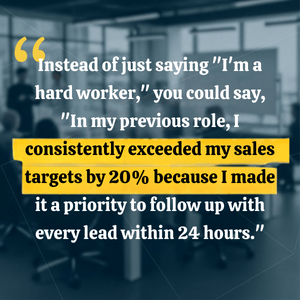
For instance, instead of just saying “I’m a hard worker,” you could say, “In my previous role, I consistently exceeded my sales targets by 20% because I made it a priority to follow up with every lead within 24 hours.”
For weaknesses, choose something genuine but not disqualifying, and always explain what you’re doing to improve it.
Prepare your own questions
Here’s something many candidates forget: the interview is also about evaluating if the role is right for you.
You should always prepare some thoughtful questions to ask the interviewer. This shows you’re serious about the opportunity and have thought deeply about whether it’s the right fit.
Some excellent questions you can ask include:
- What does a typical day in this role look like?
- Where does this role fit within the wider team and organization?
- What are the biggest challenges facing the team right now?
- What does success look like in this position after the first six months?
Though this is based on how the occasion serves you, but always try to finish your interviews by asking, “Is there any further information you need from me to help you assess if I’m right for the role?” This opens up a final opportunity to address any concerns the interviewer might have.
Test your technology (for virtual interviews)
If your interview is being conducted by video call or phone, you need to test your technology beforehand.
Make sure your internet connection is stable, your camera and microphone are working properly, and you’re familiar with the platform they’re using, whether it’s Zoom, Microsoft Teams, or Google Meet.
We once had a candidate who spent the first ten minutes of their interview struggling with audio issues. By the time they got it sorted out, they were flustered and nervous, and it affected their entire performance.
Don’t let technical difficulties derail your interview, test everything at least a day before.
Bring notes to help you
If you’re interviewing face-to-face, it’s perfectly acceptable to bring a few bullet points to prompt your thoughts. It actually shows you’ve prepared.
For virtual interviews, it’s even easier – you can have notes and helpful reminders displayed out of camera shot.
Having these reference materials will boost your confidence, jog your memory, and ensure you cover all your important points clearly.
Is it a Red Flag to Leave a Job After 3 Months?
Golden rule 2: Be professional
Professionalism matters at every stage of the interview process, from your first contact with the company to your follow-up after the interview is over.
Check your social media
Before you even get to the interview, hiring managers and recruitment agents will likely check your digital footprint.
If your social media includes inappropriate photos, profanity, or controversial opinions, this will be taken into consideration when they’re making their decision.
We are not saying you need to delete all your social media accounts, but you should make sure that what’s publicly visible shows a professional version of yourself that your future boss would appreciate.
Go through your Facebook, Instagram, Twitter, and LinkedIn profiles. If there’s anything you wouldn’t want a hiring manager to see, make it private or delete it.
Always Be on time
Whether you’re interviewing in person, virtually, or by phone, do not be late. It’s one of the worst impressions you can make.
Being late tells the interviewer that you have more important things to do or that you can’t manage your time effectively, neither of which are messages you want to send.
For in-person interviews, plan your route ahead of time and aim to arrive no more than 10 minutes early. Any earlier and you might make the interviewer feel rushed; any later and you risk being late.
For virtual interviews, log in at least five minutes early so you have time to compose yourself before the interview starts.
Dress appropriately
For face-to-face interviews, whether in person or virtual, dress smartly. Not only does it give a good impression, but research shows it actually makes you feel more competent and confident.
Even if the company has a casual dress code, err on the side of being slightly overdressed for your interview. You can always dress down once you get the job.
For virtual interviews, remember that your potential employer will see everything in the camera frame. Set the scene carefully, find good lighting, position yourself near a blank wall to minimize distractions, tidy up your space, and make sure there are no embarrassing items visible in the background.
Turn off your TV, silence your phone, close any windows to reduce outside noise, and ensure that pets, children, flatmates, and any other potential disruptors are safely elsewhere.
Have your documents ready
Always keep your CV to hand during the interview. Occasionally interviewers mislay CVs or have the wrong one in front of them.
If you’re interviewing in person, print your CV and bring it with you. For virtual interviews, have your CV ready to email to the hiring manager if needed.
What is the 7 Second Rule for CV?
This simple preparation could save the interviewer stress and embarrassment, giving them a positive impression of you. It’s also helpful to have a copy to refer to yourself if your mind goes blank.
We also recommend preparing a copy of the job description with your own notes about how your experience matches each requirement.
Follow up after the interview
Within 24 hours of your interview, send a personalized thank-you email to the hiring manager.
Thank them for their time, reiterate your interest in the position, and briefly mention one or two key points from the interview that excited you about the role.
This is also a final opportunity to mention anything important you forgot to bring up during the interview or to expand on a question you feel you could have answered better.
Just remember to keep it concise and professional, a few short paragraphs are perfect.
Golden rule 3: Be yourself
This might sound contradictory after everything I’ve said about being prepared and professional, but hear me, this is actually the most important rule of all.
Let your personality shine
After you’ve done all your homework on the company, the role, and how your skills fit, the next step is to relax and let the real you come through.
We know it’s easier said than done, but the interviewer needs to meet the authentic you, not a rehearsed, robotic version.
Recruitment is more personality-driven than ever before. Often, successful candidates aren’t the ones with the perfect, polished performance, they’re the ones who display genuine character, show passion for the role, and connect well with the interviewer.
What is The 8 8 8 Rule For Work-Life Balance?
We’ve seen candidates with slightly less experience get the job over more qualified applicants simply because their personality was a better fit for the team.
The trick is to strike a balance between being professional and being yourself. This allows the employer to make an informed judgement about whether you’ll be a good cultural fit for their team and wider company.
Be truthful and genuine
Whether you’re interviewing by phone, video, or in person, always be honest.
It sounds obvious, but it’s an easy trap to fall into. A common mistake is pretending to know more about the company than you actually do, than failing to answer a basic question about it.
If you don’t know something, just admit it. Honesty and humility are valuable traits that actually make you more employable.
We once interviewed a candidate who was asked about a specific industry regulation they’d mentioned on their CV. Instead of bluffing, they said, “I’m familiar with the basics, but I’ll be honest, I’d need to refresh my knowledge on the details.” We respected that honesty far more than if they’d tried to fake their way through.
Interviewers are humans
This is something people often forget when they’re nervous about an interview.
Interviewers are just like everyone else. Sometimes they find the situation equally intimidating, and they certainly understand what it feels like to be in the hot seat.
Try to connect with your interviewer by being open, conversational, and engaged.
For in-person interviews, this starts with a warm smile, good eye contact, and open body language. For video interviews, eye contact is still important, try to look at the camera when you’re talking, not just the screen.
Be conversational rather than stiff and formal. Consider asking the interviewer what they particularly like about working for the company or about their own role. The responses can be very insightful and help you build a connection.
Research shows we naturally like people who are similar to us, so try to find small ways to engage with the hiring manager, perhaps through a shared interest or similar past experience.
Use your personality as your superpower
You’ve already thought about how your experience and skills fit the role. That’s great. But here’s the reality – other candidates can probably match or even exceed your qualifications.
What gives you the edge? Your unique personality. No rival candidate can claim to have your exact personality, it’s your superpower.
Revisit the job description and think about the company culture and values. Consider how to weave key aspects of your personality into your responses.
Instead of just saying “I’m a team player,” expand on how your personality supports this with evidence: “My current manager says I’m someone who focuses on solutions rather than problems. I bring a positive attitude to the office and often go out of my way to help colleagues, even when it’s outside my direct responsibilities.”
By revealing a little more about the real you, you help the hiring manager make an informed judgment about whether you’ll be happy and successful in the role.
How to Make $80,000 a Year Working from Home?
Conclusion
The three golden rules of an interview which are be prepared, be professional, and be yourself might sound simple, but they’re incredibly powerful when applied correctly.
To be prepared means doing your homework on the company, understanding the role inside and out, and planning thoughtful questions that show you’re serious about the opportunity.
Being professional means managing your online presence, arriving on time, dressing appropriately, and following up after the interview in a way that reinforces your interest and suitability.
The act of being yourself means letting your authentic personality shine through, being honest and genuine, and using your unique character as a differentiator from other candidates.
When you follow these three golden rules, you’ll walk into your interview prepared to present yourself professionally while showcasing the best attributes of your personality.
You’ll make a strong impression, build a genuine connection with the interviewer, and significantly increase your chances of landing that job.