

How to Work Remotely Without Getting Distracted
Remote work has become a permanent fixture in the modern workplace. For many people, it offers flexibility, eliminates commute time, and allows for a better work-life balance.
 However, working from home also comes with its own set of challenges, and one of the biggest is dealing with distractions.
When your office is also your living space, it’s easy to get pulled away by household chores, family members, pets, or even the temptation to binge-watch your favorite show.
These distractions can hurt your productivity, make it harder to meet deadlines, and even put your remote work arrangement at risk.
The good news is that with the right strategies and mindset, you can minimize distractions and create a productive remote work environment.
Below, you’ll learn about the most common work-from-home distractions and practical ways to overcome them.
Top 10 Job Search Mistakes to Avoid in 2025
Common Distractions Often Encountered When Working From Home
Before you can solve the problem, you need to understand what you’re up against.
Here are some of the most common distractions that remote workers face:
- Household chores.
When you’re working from home, it’s tempting to squeeze in a load of laundry between meetings or wash the dishes during your lunch break. While it might seem like efficient multitasking, it pulls your focus away from work and makes it harder to maintain productivity.
- Social media and phone usage.
Your phone is always within reach, and every notification feels urgent. Whether it’s scrolling through social media, checking messages, or watching videos, phone distractions can eat up hours of your workday without you even realizing it.
- Family members and pets.
Kids need help with homework, your partner wants to chat, and your dog needs to go outside. These interruptions are unavoidable when you share your workspace with your household.
- Hobbies and personal interests.
When your guitar is sitting in the corner or your workout equipment is in the next room, it’s hard to resist the urge to take a break and indulge in something you enjoy.
- Internet and power outages.
Technical issues like internet disruptions or power cuts can derail your workday. While these aren’t distractions in the traditional sense, they can force unplanned breaks that throw off your schedule.
- Television and streaming services.
Having easy access to entertainment makes it tempting to turn on the TV for “just one episode” during a break, which can quickly turn into hours of lost productivity.
These distractions are real, and they affect nearly everyone who works from home.
The key is not to eliminate them entirely (which is often impossible), but to manage them effectively so they don’t take over your workday.
How to Get Your First Job Without Connections
Are Distractions Worse At Home Than In The Office?
Many people assume that working from home is more distracting than working in an office, but the reality is more nuanced.
Office environments have their own distractions, including noisy coworkers, impromptu meetings, office gossip, and constant interruptions from colleagues stopping by your desk.
Research shows that while remote workers do face distractions like household responsibilities and family interruptions, office workers are often distracted by background noise, unnecessary meetings, and workplace socializing.
In fact, many remote workers report feeling more productive at home because they have greater control over their environment and fewer interruptions from colleagues.
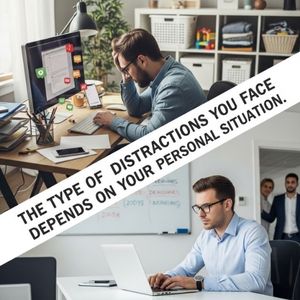
The type of distractions you face depends on your personal situation.
If you live alone in a quiet apartment, working from home might be easier than sitting in a bustling office. But if you have young children or live in a noisy household, staying focused can be more challenging.
The important thing to remember is that distractions exist in every work environment. The difference is that when you work remotely, you have more control over how you manage them.
How To Avoid Distractions When Working From Home
The best way to deal with distractions is to prevent them from happening.
Here are some effective strategies to help you avoid distractions while working remotely:
1. Create a dedicated workspace
One of the most important things you can do is set up a designated area in your home that’s solely for work.
This doesn’t have to be a full home office. It can be a corner of your bedroom, a spot at your dining table, or even a closet converted into a workstation.
The key is to have a space that signals to your brain that it’s time to work. When you sit down in that space, you’re in work mode. When you leave it, you’re off the clock.
This separation helps you mentally switch between work and personal life, and it makes it easier to avoid distractions because you’re not surrounded by reminders of household tasks or leisure activities.
2. Turn off all notifications on your devices
Your phone and computer are probably the biggest sources of distraction throughout your workday.
Every notification pulls your attention away from what you’re working on, and it can take several minutes to fully refocus after an interruption.
Turn on “Do Not Disturb” mode on your phone during work hours, or at least during periods when you need to concentrate deeply. Disable non-essential notifications on your computer as well.
How to Search for Jobs With No Experience
You can set specific times to check messages and emails rather than responding to every alert as it comes in.
This simple change can dramatically improve your focus and productivity.
3. Use website and app blockers
If you find yourself constantly opening social media, news sites, or other distracting apps, consider using a website blocker.
Tools like Freedom, Cold Turkey, or StayFocusd allow you to block access to specific websites or apps during certain hours of the day.
This removes the temptation entirely and forces you to stay focused on your work tasks.
You can customize these tools to block only the sites that distract you most, and you can schedule them to activate during your most productive work hours.
3. Change your location when necessary
Just because you work from home doesn’t mean you have to stay at home all day.
If your house is too distracting, consider relocating to a coffee shop, library, coworking space, or even a friend’s house.
Sometimes, a change of scenery is all you need to reset your focus and get more done.
This flexibility is one of the biggest advantages of remote work, so take advantage of it when you need to.
At apexglobalcareer.com, we always encourage remote workers to experiment with different environments to find what works best for them.
4. Set clear boundaries with family and housemates
If you live with other people, it’s important to communicate your work schedule and set clear boundaries.
Let your family members or roommates know when you’re working and that you shouldn’t be interrupted unless it’s urgent.
You can even use a physical signal, like closing your door or putting up a sign, to indicate that you’re in work mode.
While interruptions from family members are sometimes unavoidable, setting expectations can significantly reduce unnecessary distractions.
10 Smart Ways to Find Jobs Online Fast
How To Limit Distractions When You Can’t Avoid Them
Sometimes, distractions are unavoidable. You can’t ignore your crying baby or refuse to answer the door when someone is making an important delivery.
In these cases, the goal is to limit the impact of distractions rather than trying to eliminate them completely.
Here’s how you can do that:
1. Take scheduled breaks
Instead of trying to power through your entire workday without a break, schedule regular short breaks to take care of personal tasks or recharge.
Use these breaks to walk your dog, check on your kids, or do a quick household chore.
When you give yourself permission to take breaks, you’re less likely to feel tempted to sneak in distractions during work time.
The Pomodoro Technique is a popular time management method where you work for 25 minutes, then take a 5-minute break. After four cycles, you take a longer 15-30 minute break.
This approach keeps your mind fresh and gives you designated times to handle distractions without feeling guilty.
Simple Job Application Tips That Actually Work
2. Set daily goals and priorities
When you start your workday, identify the top three tasks you need to accomplish.
Having clear goals gives you something concrete to focus on, and it creates a sense of urgency that helps you resist distractions.
If you know you need to finish a report by 3 PM, you’re less likely to get sidetracked by non-urgent tasks or temptations.
Break larger projects into smaller, manageable tasks and focus on completing one thing at a time.
This approach not only keeps you productive but also gives you a sense of accomplishment that motivates you to keep going.
3. Use time management techniques
There are several proven time management methods that can help you stay focused and minimize distractions:
The Pomodoro Technique: Work in focused 25-minute intervals with short breaks in between.
Time blocking: Schedule specific blocks of time for different tasks throughout your day.
Eat the Frog: Tackle your most challenging or important task first thing in the morning when your energy and focus are at their peak.
The Two-Minute Rule: If a task takes less than two minutes, do it immediately instead of letting it pile up and distract you later.
Experiment with different techniques to find the one that works best for your work style and schedule.
What Are The 5 Most Common Interview Mistakes?
4.Work during your most productive hours
Not everyone is most productive during traditional 9-to-5 hours.
Some people do their best work early in the morning, while others hit their stride late at night.
If your job allows for flexible hours, try to schedule your most important work during the times when you naturally feel most focused and energized.
This might mean starting work earlier or later than usual, or splitting your workday into two sessions with a longer break in the middle.
When you work during your peak productivity hours, you’ll get more things done in less time and feel less tempted by distractions.
5. Communicate with your employer or team
If distractions at home are significantly affecting your work, don’t be afraid to communicate with your manager or team.
Explain the challenges you’re facing and discuss possible solutions, such as adjusting your schedule, working from a different location occasionally, or using collaboration tools that help you stay accountable.
Most employers understand that remote work comes with unique challenges, and they’re often willing to work with you to find solutions that benefit everyone.
Being honest about your struggles shows professionalism and a commitment to doing your best work.
What Are the Three Golden Rules of an Interview?
Tools That Can Help You Stay Focused
In addition to the strategies mentioned above, there are several tools and apps designed specifically to help remote workers stay productive:
- Focus apps
Tools like Forest, Focus@Will, and Brain.fm use techniques like gamification or background music to help you maintain concentration.
- Time tracking softwares
Apps like Toggl or RescueTime help you monitor how you’re spending your time and identify where distractions are creeping in.
- Task management tools
Platforms like Todoist, Asana, or Trello help you organize your work and stay on top of deadlines.
- Communication tools
Slack, Microsoft Teams, and Zoom help you stay connected with your team while minimizing unnecessary back-and-forth emails.
These tools can make a significant difference in your ability to stay focused and productive while working remotely.
How to Navigate a Successful Career Change as a Young Professional
Final Words
Working remotely without getting distracted is possible, but it requires intentional effort and the right strategies.
By creating a dedicated workspace, turning off notifications, setting clear boundaries with family members, and using proven time management techniques, you can significantly reduce distractions and improve your productivity.
Remember that distractions are a normal part of working from home, and you don’t have to be perfect. The goal is to manage them effectively so they don’t derail your entire workday.
Experiment with different strategies to find what works best for your situation, and don’t be afraid to adjust your approach as your circumstances change.
With the right mindset and tools, you can enjoy the benefits of remote work without sacrificing your productivity or professional success.
At apexglobalcareer.com, we’re committed to helping remote workers thrive in their careers and create work environments that support their success.