

How to Apply for Jobs in the USA From Abroad
We all know that getting a job in the United States from other countries abroad is one of the most difficult career moves you can make. The process is enormous, from your getting the visa requirements, understanding American hiring practices, competing with local 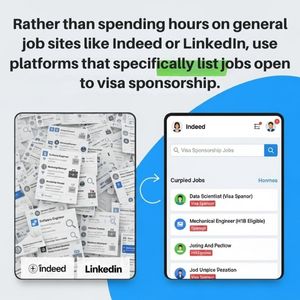 candidates, and convincing employers to take on the extra cost and complexity of hiring an international worker.
Many talented professionals give up before they even start because the process seems overwhelming or impossible.
However, it is worth nothing that thousands of international workers successfully secure jobs in the USA every year, so you too can. The difference between those who succeed and those who don’t usually comes down to strategy, preparation, and persistence.
If you’re serious about working in the United States, you need more than just a strong resume. You need to understand how the American job market works, which visa options are available to you, and how to position yourself as a candidate worth the investment.
What to Wear to a Job Interview
Understanding U.S. Work Visas And Sponsorship
Before you start applying for jobs, you need to understand the visa situation. This is the biggest barrier most  international workers face.
To work legally in the United States, you need work authorization.
For most people applying from abroad, this means getting a work visa sponsored by a U.S. employer.
Who needs visa sponsorship
You’ll need an employer to sponsor your work visa unless you fall into one of these exceptions:
- You’re a U.S. citizen
- You hold a green card (permanent residency)
- You have an Employment Authorization Document (EAD)
- You won the Diversity Visa (Green Card) lottery
- A close family member (parent, spouse, child, or sibling) who is a U.S. citizen or green card holder is sponsoring you
- Your spouse has a work visa (like H-1B, L-1, E-2, or J-1) and you can apply for dependent work authorization
- You’re being transferred to the U.S. by your current employer at a management or specialized knowledge level
- You have extraordinary ability in arts, athletics, sciences, or business
- You’re starting your own company or making a substantial investment in a U.S. business
If you don’t fall into any of these categories, you’ll need to find a U.S. employer willing to sponsor your work visa.
How to Start Earning as a Freelancer in 2025
The challenge with visa sponsorship
Here’s the reality that stops many international job seekers: only about 10% of U.S. companies offer visa sponsorship, and not for all positions or departments.
When you need sponsorship, you’ll often hear responses like:
“Come back when you have work authorization.” (They don’t realize they need to sponsor you.)
“We don’t offer visa sponsorship.” (They know you need sponsorship but choose not to provide it.)
Or worse, you’ll get no response at all, leaving you wondering whether it’s because you need sponsorship, lack experience, or have a weak application.
This is why a strategic approach is crucial.
Applying randomly to hundreds of jobs without targeting companies that sponsor workers is a waste of time and energy.
Common Workplace Habits That Kill Productivity
How To Find Companies That Sponsor International Workers
The first step in your job search should be identifying companies that actually sponsor work visas for positions you qualify for.
1. Research about companies with sponsorship history
U.S. companies that sponsor work visas must file petitions with the Department of Labor, and this information is publicly available.
You can research which companies have sponsored workers in your field in recent years, what positions they sponsored, and their approval rates.
Look for companies that have consistently sponsored workers similar to you over the past 2-3 years. This indicates they’re open to hiring international talent and have established processes for visa sponsorship.
Best Jobs for Students Who Want Extra Income
2. Use specialized job boards
Rather than spending hours on general job sites like Indeed or LinkedIn, use platforms that specifically list jobs open to visa sponsorship.
These specialized job boards filter opportunities to show only positions where employers are willing to sponsor international workers.
This saves you enormous time and frustration by eliminating companies that won’t consider you regardless of your qualifications.
At apexglobalcareer.com, we help international job seekers connect with global opportunities, including resources for those seeking positions in various countries including the United States.
3. Target the right job positions
Not all jobs are equally open to sponsorship.
Some positions and industries are more likely to sponsor international workers than others.
Technology, healthcare, engineering, academic research, and specialized business roles tend to have higher sponsorship rates because there are often shortages of qualified local candidates.
Entry-level positions, jobs that require security clearances, government positions, and roles in oversaturated fields are less likely to offer sponsorship.
Focus your efforts on positions where your skills are in demand and where companies have a history of sponsoring workers.
How to Work Abroad Legally as a Beginner
Understanding Common U.S. Work Visas
Different work visas have different requirements, durations, and pathways.
Understanding which visas you might qualify for helps you target appropriate opportunities.
1. H-1B visa (specialty occupations)
The H-1B is one of the most common work visas for skilled professionals in specialty occupations like IT, engineering, healthcare, finance, and education.
Requirements typically include a bachelor’s degree (or equivalent experience) in a relevant field, and the job must require specialized knowledge.
The H-1B has an annual cap, meaning there’s a lottery system for most applicants.
However, certain employers (universities, research institutions, non-profits) are cap-exempt.
H-1B visas are initially granted for three years and can be extended for another three years. They also provide a pathway to permanent residency (green card).
10 Best Free Websites for Job Search in 2025
2. L-1 visa (intracompany transfers)
The L-1 visa is for employees being transferred to a U.S. office of their current employer.
You must have worked for the company outside the U.S. for at least one continuous year in the past three years, and you must be in a managerial, executive, or specialized knowledge role.
This visa doesn’t require a degree and has no annual cap.
It’s initially granted for 1-3 years and can be extended.
3. O-1 visa (extraordinary ability)
The O-1 is for individuals with extraordinary ability or achievement in sciences, arts, education, business, or athletics.
You’ll need to demonstrate sustained national or international recognition and provide extensive documentation of your achievements.
How to Explain Employment Gaps on Resume
While difficult to qualify for, the O-1 has no cap and can be renewed indefinitely in one-year increments.
4. E-2 visa (treaty investors)
If you’re from a treaty country and plan to invest a substantial amount (typically $100,000+) in a U.S. business you’ll operate, the E-2 might be an option.
This visa is renewable indefinitely as long as the business continues to operate, though it doesn’t directly lead to permanent residency.
5. TN visa (NAFTA professionals – Canada and Mexico)
Canadian and Mexican citizens in certain professions can work in the U.S. under the TN visa category, which is easier to obtain than most other work visas.
Why You’re Not Getting Interviews and How to Fix It
Creating An ATS-friendly Resume For The U.S. Market
Having the right visa strategy means nothing if your resume doesn’t get past the initial screening.
About 90% of companies that sponsor workers use Applicant Tracking Systems (ATS) to filter applications. These systems scan resumes for keywords and qualifications before a human ever sees them.
Statistics show that 75% of applications are filtered out by ATS and never reach a recruiter.
This means your resume must be optimized to pass these systems.
1. Follow American resume standards
U.S. resumes differ from CVs in other countries. They should typically be 1-2 pages, results-focused, and free of personal information like photos, age, marital status, or nationality.
Start with a clear header containing your name and contact information. Include a professional summary or objective statement that immediately tells employers what you’re looking for and what you offer.
2. Make it keyword-optimized
Read job descriptions carefully and incorporate relevant keywords throughout your resume.
If a job requires “project management,” “agile methodology,” and “stakeholder communication,” these exact phrases should appear in your resume if you have these skills.
Don’t lie or add skills you don’t have, but make sure the language in your resume matches the language employers use in their job postings.
How to Write a Cover Letter That Gets Interviews
3. Focus on results and achievements
Rather than listing job duties, focus on accomplishments and quantifiable results.
Instead of “Managed social media accounts,” write “Increased social media engagement by 150% over six months, resulting in 30% more website traffic and 25% higher conversion rates.”
Numbers, percentages, and concrete outcomes make your achievements tangible and memorable.
4. Format for ATS compatibility
Use standard section headings like “Work Experience,” “Education,” and “Skills.” Avoid graphics, tables, columns, headers, footers, or unusual formatting that can confuse ATS systems.
Stick to common fonts like Arial, Calibri, or Times New Roman.
Save your resume as a .docx or PDF file, as specified in the application instructions.
How to Work Remotely Without Getting Distracted
How To Write a Compelling Cover Letter
Many applicants skip cover letters or submit generic templates. This is a missed opportunity.
A strong cover letter helps you stand out, especially when you need visa sponsorship.
It’s your chance to explain your situation, express genuine interest in the company, and make a case for why you’re worth the sponsorship investment.
1. Address the sponsorship question directly
Don’t avoid the elephant in the room. Acknowledge that you’ll need sponsorship and briefly explain your visa situation.
You might write: “I’m currently based in [country] and would require H-1B visa sponsorship. I understand this involves additional time and investment, and I’m confident that my [specific skills/experience] will provide significant value that justifies this investment.”
Being upfront shows integrity and prevents wasting anyone’s time.
Top 10 Job Search Mistakes to Avoid in 2025
2. Connect your background to the role
Explain how your international experience, perspective, or skills uniquely qualify you for this position.
Perhaps your experience in international markets, multilingual abilities, or understanding of global business practices provides value that local candidates can’t offer.
3. Show you’ve researched the company
Demonstrate that you’ve done your homework by mentioning specific projects, values, challenges, or achievements of the company that resonate with you.
This shows genuine interest rather than desperation to get any U.S. job.
How to Get Your First Job Without Connections
4. Keep it concise
Your cover letter should be no longer than one page. Make every sentence count.
Application Strategies And Follow-up
Simply submitting applications isn’t enough. You need a strategic approach to maximize your chances.
1. Quality over quantity
Don’t apply to 100 random jobs hoping something sticks. Instead, carefully select 10-15 highly relevant positions at companies known to sponsor workers and craft tailored applications for each.
This focused approach yields better results than blasting generic applications everywhere.
How to Search for Jobs With No Experience
2. Apply early and follow up
Job postings receive the most attention in the first few days.
Set up alerts so you can apply quickly to new relevant openings.
After submitting your application, follow up with the recruiter via email after 3 days, then again 7 days later if you haven’t heard back.
Research the recruiter’s name and contact information through LinkedIn or the company website. Personalized follow-ups show initiative and keep your application top of mind.
3. Optimize your LinkedIn profile
Your LinkedIn profile should align with your resume and be fully completed.
Many U.S. recruiters search LinkedIn for candidates, so an optimized profile increases your visibility.
What is The 8 8 8 Rule For Work-Life Balance?
Set your location preferences to include U.S. cities where you’re willing to work, and make it clear in your headline or summary that you’re open to opportunities requiring relocation.
4. Network strategically
Networking is crucial in the U.S. job market. Many positions are filled through referrals before they’re even publicly posted.
Connect with people who work at your target companies, especially those from your country or with international backgrounds who understand the visa sponsorship process.
Attend industry events, join professional associations, and participate in online communities related to your field.
When you find a job you want to apply for, check if you have any LinkedIn connections at that company who could provide a referral or introduction.
Simple Job Application Tips That Actually Work
Alternative Strategies Beyond Job Boards
Relying solely on job postings limits your opportunities. Consider these additional approaches:
1. Spontaneous applications
About 80% of U.S. jobs are never posted publicly. Research companies that match your criteria and have sponsored workers in the past, then send unsolicited applications to their hiring managers or HR departments.
Explain your interest in the company, highlight your relevant skills, and express your willingness to discuss how you could add value to their team.
2. Work with recruitment agencies
Some recruitment agencies specialize in placing international candidates. They understand the visa process and have relationships with companies open to sponsorship.
Research on agencies that work in your industry and reach out to establish relationships.
What Are The 5 Most Common Interview Mistakes?
3. Consider contract or temporary positions first
Some companies are more willing to sponsor workers they’ve already employed on a temporary basis through programs or contracts.
Starting with a temporary position can give you a foot in the door and a chance to prove your value before the company invests in sponsorship.
4. Leverage your current employer
If you work for a multinational company, explore internal transfer opportunities to U.S. offices through L-1 visas.
This is often easier than finding a new employer willing to sponsor you.
What Are the Three Golden Rules of an Interview?
Preparing For Interviews
If your application succeeds and you get an interview, preparation is crucial.
1. Address practical concerns proactively
Interviewers may have concerns about hiring internationally.
Address these head-on:
- Explain your timeline for when you could start if offered the position
- Demonstrate your knowledge of the visa process and required steps
- Show flexibility about relocation logistics
- Emphasize your commitment to the role and company
2. Research American interview culture
U.S. interviews often focus on behavioral questions and specific examples of past accomplishments.
How to Navigate a Successful Career Change as a Young Professional
Prepare stories that demonstrate your skills using the STAR method (Situation, Task, Action, Result).
Practice answering questions confidently and concisely.
Americans generally appreciate direct communication and self-promotion that would be considered immodest in some cultures.
3. Consider time zone challenges
Be flexible about interview scheduling to accommodate U.S. time zones. Early mornings or late evenings may be necessary.
Test your technology beforehand for video interviews to avoid technical difficulties.
What is the 7 Second Rule for CV?
Final Words
Applying for jobs in the USA from abroad is challenging, but it’s absolutely achievable with the right strategy and persistence.
Focus your efforts on companies that sponsor workers, create ATS-optimized application materials, leverage networking opportunities, and follow up consistently.
Understand which visas you qualify for and target positions accordingly. Be patient—the process often takes months, and you’ll face rejections along the way.
Each application and interview is a learning opportunity that brings you closer to success.
Stay organized, track your applications, learn from feedback, and continuously refine your approach.
Thousands of international professionals successfully make this transition every year. With proper preparation and determination, you can be one of them.
At apexglobalcareer.com, we provide resources and opportunities to help job seekers connect with international career opportunities and achieve their professional goals.