


What is the 7 Second Rule for CV?
When you’re on the hunt for your dream job, your CV is your first chance to make an impression. But What is the 7 Second Rule for CV?
Recruiters spend an average of just seven seconds reviewing your CV before deciding whether to 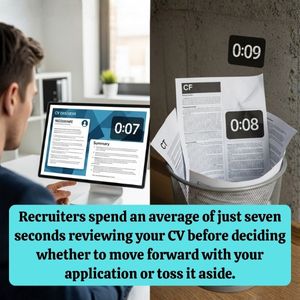 move forward with your application or toss it aside.
Yes, you read that right, seven seconds.
After spending hours crafting the perfect CV, polishing every detail, and ensuring your qualifications shine through, it can feel disheartening to know that all your hard work might be judged in less time than it takes to tie your shoelaces.
But don’t worry. Understanding the seven-second rule and how to work with it can dramatically improve your chances of landing that interview.
Let’s dive into what this rule means and, more importantly, how you can make those seven seconds count.
What is The 7 Second Rule For CV?
The 7 second rule for CV refers to the average amount of time recruiters and hiring managers spend on an initial scan of your resume or CV before deciding whether you’re worth considering for the role.
Research has consistently shown that recruiters don’t read CVs word-for-word during the first review. Instead, they quickly scan for key information that tells them whether you’re a potential fit for the position.
During these critical seven seconds, recruiters are looking for specific elements:
- Your current or most recent job title
- Your previous employers or companies
- Start and end dates of your employment
- Your educational background
- Relevant skills that match the job description
If they can’t find what they’re looking for quickly, or if your CV appears cluttered and difficult to navigate, it’s likely heading straight to the reject pile, no matter how qualified you actually are.
What is The 8 8 8 Rule For Work-Life Balance?
Why Do Recruiters Spend Only 7 Seconds On CVs?
You might wonder why recruiters don’t invest more time in reviewing each application, especially when they’re making such important hiring decisions.
The answer is simple: volume.
For popular job openings, particularly at well-known companies, recruiters can receive hundreds or even thousands of applications. It’s simply not feasible to spend 10 or 15 minutes thoroughly reading each CV.
Instead, they’ve developed an efficient screening process. The initial seven-second scan helps them quickly filter out candidates who clearly don’t meet the basic requirements, allowing them to focus their time on the most promising applications.
Think of it as a two-stage process: the seven-second scan is the first hurdle. If your CV passes this initial test, then the recruiter will invest more time reading it in detail during the second review.
How Can You Make Your CV Pass The 7 Second Test?
Now that you understand what the seven-second rule means, let’s focus on the practical steps you can take to ensure your CV makes the cut.
1. Keep your CV concise and relevant
 Your CV should be no longer than two pages, three at the absolute maximum if you have extensive relevant experience.
Recruiters don’t have time to wade through pages of information, so focus on quality over quantity. Include only experiences, achievements, and skills that are directly relevant to the job you’re applying for.
If you worked as a barista five years ago but you’re now applying for a marketing manager position, you can probably leave that out unless it’s the only work experience you have or it demonstrates transferable skills that are truly relevant.
Every line on your CV should serve a purpose and strengthen your application.
2. Use a clean, professional layout
Visual presentation matters more than you might think.
A cluttered, dense CV with tiny fonts and no white space will overwhelm the recruiter during those crucial seven seconds. On the other hand, a clean, well-organized layout with clear headings and plenty of breathing room makes it easy for them to find the information they need.
Use a professional template that’s visually appealing but not overly fancy. Unless you’re applying for a creative role like graphic designer, stick to classic, easy-to-read formats.
Include clear section headings such as:
- Professional Summary or Personal Statement
- Work Experience
- Education
- Skills
- Certifications (if relevant)
3. Put your most important information at the top
Recruiters typically scan CVs in an F-pattern, focusing on the top and left side of the document.
This means your most impressive and relevant qualifications should appear in the upper third of your CV. Start with a compelling personal statement that immediately communicates who you are professionally and what value you bring.
Your most recent and relevant work experience should follow close behind. Don’t bury your best achievements on page two, the recruiter might never get there.
4. Tailor your CV to each job application
One of the biggest mistakes job seekers make is using the same generic CV for every application.
Recruiters can spot a generic CV from a mile away, and it signals that you haven’t put in the effort to understand what they’re looking for.
Read the job description carefully and identify the key requirements and skills they’re emphasizing. Then, adjust your CV to highlight experiences and achievements that directly match these requirements.
If the job listing mentions “project management skills” multiple times, make sure your CV prominently features your project management experience with specific examples and results.
This doesn’t mean lying or inventing experience you don’t have. It simply means emphasizing the parts of your background that are most relevant to this specific role.
5. Use bullet points and clear formatting
Nothing kills the seven-second scan faster than a wall-of-text paragraph.
 Instead, use bullet points to break down your responsibilities and achievements under each role. Start each bullet point with a strong action verb like “managed,” “developed,” “implemented,” or “increased.”
Keep your bullet points concise, one to two lines each, and focus on achievements rather than just listing duties.
For example, instead of writing “Responsible for social media accounts,” write “Grew Instagram following by 150% in six months through strategic content planning and community engagement.”
The second version tells a story of impact and results, which is far more compelling during a quick scan.
6. Ensure your contact information is professional
This might seem obvious, but it’s worth emphasizing: your email address matters.
Using an unprofessional email like partygirl2000@email.com or cooldude123@email.com will immediately hurt your credibility, even if the rest of your CV is flawless.
Create a professional email address using your name, such as firstname.lastname@email.com. This simple step shows you understand professional standards and take your job search seriously.
Also, include only relevant contact information: your phone number, email address, LinkedIn profile (if you have one), and city/region. You don’t need to include your full street address.
7. Proofread thoroughly for errors
Typos and grammatical errors can instantly disqualify you from consideration.
Even a small mistake suggests and depicts carelessness and lack of attention to detail, which are qualities no employer wants in their team members.
After writing your CV, step away from it for a few hours or even a day. Then come back and proofread it with fresh eyes. Better yet, ask a friend or family member to review it as well, as they might catch errors you’ve missed.
You can also use tools like Grammarly or other spell-checkers, but don’t rely on them exclusively. These tools miss context-specific errors that a human reviewer would catch.
8. Include quantifiable achievements
Numbers and metrics catch the recruiter’s eye during that seven-second scan.
Whenever possible, quantify your achievements with specific numbers, percentages, naira or dollar amounts. These concrete details make your accomplishments more credible and impressive.
Instead of you saying “Improved sales performance,” you can say “Increased quarterly sales by 35%, generating an additional £50,000 in revenue.”
Instead of “Managed a team,” say “Led a cross-functional team of 12 people across three departments.”
These specific details paint a clear picture of your impact and capabilities, even in a quick glance.
What Happens If Your CV Passes The 7 Second Test?
If your CV successfully captures the recruiter’s attention during the initial seven-second scan, congratulations! you’ve cleared the first hurdle!
At this point, the recruiter will spend more time reviewing your CV in detail, typically taking several minutes to read through your experiences, qualifications, and achievements more thoroughly.
They’ll assess whether your background aligns with the job requirements and company culture. If everything checks out, your CV will move to the next stage of the hiring process, which might include:
- Phone screening or initial interview
- Skills assessment or testing
- In-person or video interviews
- Reference checks
The seven-second rule only applies to that crucial first impression. Once you’ve passed that initial test, your CV will receive the thorough attention it deserves.
How to Make $80,000 a Year Working from Home?
Common Mistakes That Make One Fail The 7 Second Test
Understanding what not to do is just as important as knowing the right approach. Here are common CV mistakes that can doom your application during the seven-second scan:
- Using an unprofessional or overly creative format for traditional roles.
While a creative CV might work for designers or artists, most industries prefer clean, traditional formats that are easy to scan.
- Including irrelevant information.
Your hobbies, unless directly relevant to the job, generally don’t need to be on your CV. The same goes for outdated skills or work experience from 15+ years ago that’s no longer relevant.
- Writing a lengthy personal statement.
Your personal statement should be three to four sentences maximum – just enough to convey your professional identity and value proposition.
- Listing duties instead of achievements.
Recruiters want to know what you accomplished, not just what you were supposed to do.
- Using jargon or acronyms without context.
Not every recruiter will be familiar with industry-specific terminology, especially if they’re screening for multiple departments.
Final Thoughts
The seven-second rule for CVs is a reality of modern job searching that you can’t ignore.
While it might seem unfair that recruiters spend so little time on your carefully crafted CV, understanding this reality empowers you to adapt your approach and significantly improve your chances of success.
By keeping your CV concise, visually appealing, and tailored to each role, you can ensure that those seven seconds count. Focus on making your most impressive qualifications immediately visible, use clear formatting and bullet points, and quantify your achievements wherever possible.
With these strategies in hand, you’re now equipped to create a CV that not only survives the seven-second test but excels at it, putting you one step closer to landing your dream job.